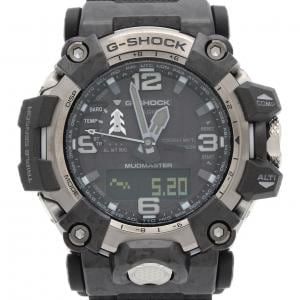
Casio G-Shock Mudmaster GWG-2000 (GWG-2000, GWG-2000-1A1, GWG-2000-1A3) , Current Prices, JDM Listings, Market Analysis
The Casio G-Shock Mudmaster GWG-2000 sits at the top of G-Shock's outdoor hierarchy, built for conditions where most watches would fail outright. Tonbo tracks it because it has a consistent Japanese retail presence and a meaningful gap between JDM sourcing costs and US resale prices. Right now the US median sits at $400, with the market trading between $320 and $500 depending on condition and colorway. The two most active reference numbers in circulation are the GWG-2000-1A1 and GWG-2000-1A3.
Current US Market Value
The current US median for the Casio G-Shock Mudmaster GWG-2000 is $400, with the interquartile range running from $320 at the 25th percentile to $500 at the 75th percentile. That $180 spread reflects genuine variance across condition grades and colorways rather than unusual volatility. It is worth being upfront about one thing here: this GWG-2000 price estimate is built from a sample size of five comparable sales, which Tonbo flags as limited comps. The directional read is credible, but the median should be treated as an informed estimate rather than a deep liquid average. As more transactions are logged, the confidence band will tighten.
Active JDM Listings
Japan is showing quiet but real supply right now. The most recent listing came through Komehyo on June 15th in close-to-unused condition at ¥55,000, which translates to roughly $365 USD at current exchange rates. For anyone looking at GWG-2000 for sale from Japanese sources, Komehyo is a reliable platform with consistent grading standards, which matters when buying cross-border. Current JDM activity in brief:
- June 15 listing on Komehyo at ¥55,000, graded close to unused
- Single active listing in the past 14-day window, suggesting thin but present supply
- Condition grade from Komehyo typically aligns with what Western buyers would call near-mint
- No current auction-format listings logged in the monitoring window
- Buy GWG-2000 Japan activity has been concentrated at fixed-price platforms rather than bidding formats in recent weeks
Recent Alert History
No strict buy alerts or opportunity alerts have fired for the GWG-2000 in the past 90 days. That is an honest read, not a gap in coverage. It means no individual listing has cleared Tonbo's threshold for a statistically significant discount against the US comparable set during that window. The absence of alerts is not a red flag on the model itself. It reflects a market where JDM prices and US prices have stayed reasonably close relative to each other. You can review what alert thresholds look like across tracked models at tonbomarket.com/signals.
Japan vs. US Price Gap
At a ¥55,000 JDM ask against a $400 US median, the raw arbitrage before fees and shipping is modest but present. The practical margin narrows once you account for deputy service fees, domestic Japan shipping, international freight, and import duties, which together typically add $40 to $80 to landed cost depending on the route. The main risk factor here is not condition fraud on a platform like Komehyo but rather comp thinness on the US side. With only five comparable sales informing the $400 median, a single soft transaction could shift the apparent gap. Anyone evaluating a specific GWG-2000 price opportunity should also check recent sold listings across US platforms directly to pressure-test the current comp set. Browse active deal flags across Tonbo-tracked models at tonbomarket.com/deals.
Track the Casio G-Shock Mudmaster GWG-2000 on Tonbo
Tonbo monitors JDM platforms daily and compares live listings against US market comps for every tracked model, including the GWG-2000. The Collector tier is free to start at tonbomarket.com/dashboard and includes a five-model watchlist with no credit card required. When a listing clears the opportunity threshold, the Member tier at $10 per month pushes a real-time alert directly to Discord so you are not checking manually. If the GWG-2000-1A1 or GWG-2000-1A3 is on your list, adding it now means you will catch the next signal when it fires rather than reading about it after the fact.